
Wednesday, December 31, 2008


Friday, December 26, 2008
Fun with Google News
84 newspapers' online editions are currently running a story containing the phrase 'busy festive period'.
34 contain the phrase 'fixture pile-up', with 36 favouring to refer to a 'fixture backlog'.
55 contain the phrase 'fixture congestion'.
The bulk of Premiership and Championship teams are playing three games in nine days (including F.A. cup commitments). Really, it's no different than many weeks during the season, but the clichés of football reporting dictate otherwise.
34 contain the phrase 'fixture pile-up', with 36 favouring to refer to a 'fixture backlog'.
55 contain the phrase 'fixture congestion'.
The bulk of Premiership and Championship teams are playing three games in nine days (including F.A. cup commitments). Really, it's no different than many weeks during the season, but the clichés of football reporting dictate otherwise.
Wednesday, December 24, 2008
The Stuff that Dreams are Made of: Part III
This is getting disturbing.
I recently had a dream about what the M's might do with $9.5 million flop Miguel Batista.
Batista is a novellist and one of the more articulate players about. By rights I should like him.
Batista is also a huge fan of Kenny G and a terrible pitcher. So in fact I can't stand him.
My suggestion: throw him off a bridge somewhere. Hopefully that'll stop these bloody nightmares.
I recently had a dream about what the M's might do with $9.5 million flop Miguel Batista.
Batista is a novellist and one of the more articulate players about. By rights I should like him.
Batista is also a huge fan of Kenny G and a terrible pitcher. So in fact I can't stand him.
My suggestion: throw him off a bridge somewhere. Hopefully that'll stop these bloody nightmares.
Thursday, December 18, 2008
Process and Outcomes
Former Los Angeles Dodgers General Manager Paul DePodesta has a very interesting post on his blog where he talks about the importance of process in the running of his current team, the San Diego Padres. This he does with specific reference to the draft, noting that it takes so long to actually assess the outcome of the baseball draft that one must follow a sound process, and also, that luck can and does play a huge part in these decisions. One can follow a sound process and be the victim of bad luck, and vice versa. He uses the following model:

What makes this model so appealing is that it can, quite literally, be applied across the board. DePodesta acknowledges that one cannot win all the time, but that by following the correct process, one can at least increase their chances of being successful. After all, in baseball, a successful season is pegged at a 60% winning percentage. The question that occurred to me was this: how such a model be applied to football?
First of all, it needs to be noted that there can be more than one 'correct' process. This depends upon the resources available to clubs, and their relative aspirations (these factors are generally linked). In baseball, it is much easier to identify a tangible 'organizational philosophy' than in football, as has been mention on this blog before. I would argue that this is because baseball is at its essence much more quantifiable than football, or many sports. Football can be quantified, however, in certain ways. After all, that is what league tables seek to do.
The Premier League has had its top four spots yield a Champions League berth for six years now. Lets define finishing in the top four in the period between 2002/3 - 2007/8 as success (yes, all success is relative). In that period, the top four teams have had an average win percentage of 61.1% (never going higher than 65.1% or lower than 57.8%). So, the most successful teams are still only winning 60% of the time, in general (and yes, there are differences between those teams finishing first and fourth). It seems to leave a lot of room for failure (in the form of a tie or a loss), and for bad luck.
You can not win all the time, but you can follow the correct process to facilitate winning more consistently. It seems that the centrality of luck and randomness are still underestimated in football, however. A cluster of three or four defeats in a row and teams ditch their manager. This can be attributed to the much smaller sample size in Premiership football (a 38 game season versus a 162 game regular season in baseball). The stakes become higher in each game.
Ideally, teams would like to reside in the top left corner of the model, receiving deserved success. Within the top four, there are two examples of vastly differing processes, both of which have received 'deserved success' (relatively speaking). Chelsea put a structure of experienced and savvy football executives in place to make sure that there was a powerful link between Roman Abramovich's money and the direction of the first team, and that money was not merely being splurged for the sake of it (yes, the latter happened, but they still won two Premiership titles, so I, for one, will not argue). Essentially, the team was constructed with expensive signings, however. This is the process that Man City should be aiming for, in my opinion.
A second example of a good process would be Arsenal, who have built some successful teams (no Premierships, alas) on the basis of player development. Acquiring the best young talent from across Europe had two advantages, as far as I can see: it was cheaper, and it allowed the players to develop a certain style of play with Arsenal. The problem with this process is that, as DePodesta noted with respect to the draft, Arsenal will only discover the outcome a number of years down the road, and this is not always positive. However, Arsene Wenger has done a good job of managing it thus far.
Another proponent, Jack Charlton, used to tell two stories about his management style. Firstly, he often quoted Alf Ramsey, who always picked the best team, not necessarily the best eleven individuals. Secondly, he pointed out that the opposition could not score when the ball is in their half (ie, advocating the long ball out of defence). There is an inherent contradiction in this approach, as the long ball is premised upon what are oftentimes random outcomes. This can work in positive and negative ways, but it is no guaranteed way of retaining possession. And the opposition also cannot score when they do not have the ball. Perhaps it's a sound process to stop the opposition, but it does not facilitate winning.
On the other hand, there are many apocryphal stories about some of the most successful managers simply telling their players to 'go out and enjoy/express themselves.' This probably needs to be taken with a huge grain of salt, although in the situation where one has eleven immensely talented individuals on the pitch, there is every chance they can play more instinctively than the eleven journeymen, for example. The dalliance with long ball in the 1980s and 1990s has mostly come to an end, and the arrival of more technically gifted players into the Premiership has ensured that keep-ball tactics are the norm (although not without the odd exception, usually a promoted team).
Processes are a little messy then when we try to apply them to how teams line up on the pitch. Tactics are like the latest fashions: they come and go. 4-4-2, 3-5-2, 4-5-1, 4-2-3-1, and variations thereon have all dominated for periods in the recent past. The only exception to this is with away games or in knockout play, where teams may alter their lineup in the hopes of getting a desired result. Given that, in many ways, teams will follow very similar processes when their teams take to the pitch (similar formations, similar passing games, similar philosophy - note the newfangled fetish for the 'Makelele role'), perhaps it is best to think of processes and the model best in terms of how teams acquire and evaluate their talent. Luck will always conspire against you at some point, but smart squad construction will generally get you a long way. Not exactly a revelation, but something that an increasing number of managers have failed to master.Wednesday, December 17, 2008
Pessimism

101 losses will engender pessimism. This is a poll, taken from the ESPN website, which asked whether people felt their team would be competitive in MLB in 2009. Red denotes a negative response. Of course, the irony is that the Seattle Mariners could very will be competitive a lot sooner than people think, thanks to the savvy makeover currently being undertaken by new GM Jack Zduriencik. But that's another story....
Sunday, December 14, 2008
Premier Soccer Saturday is actually the same programme as The Premiership and Jimmy Magee still can't commentate for shit

I have been out of the country for the past few months. During that time, I have missed out on one (well, many) of life's simpler pleasures, namely, watching The Premiership on a Saturday evening on RTE (The Premiership is preferable to MOTD because it's on earlier - for me, this is an important part of the lazy-Saturday routine). An hour and a half of football highlights, hot off the press: what's not to like?
I called my local Chinese takeaway just before 7pm, and got myself settled in for an enjoyable evening of sloth. My food arrived at around 7.15, but when 7.30 rolled around, the time when the Premiership normally starts, nothing. I shouldn't have been so quick to assume, but after many years, it is easy to grow accustomed to certain routines in life. The Premiership at 7.30 was one of them. Consulting the TV guide, I discovered that a show calling itself Premier Soccer Saturday was instead scheduled for 9 o' clock. That would have to suffice.
It seems that I missed some sort of rebranding of RTE's football coverage during my Parisian exile. Let me offer some belated commentary on it now. Premier Soccer Saturday is the worst name for a football show I have ever heard of. It sounds like a cheap imitation of the real product, much like when supermarkets pitch their own brand cereal as 'corned flakes' or 'wheat biscuits'. Better still, it is like regional Irish fast food outlets who hanker after even the most tenuous connection to a legitimate chain such as McDonalds or Burger King and thus, in certain parts of the country, one can frequent BurgerMac's if sufficiently tanked. But I digress. Premier Soccer Saturday seems like contraband.
Once it began, at the New And Improved time of 9pm, I discovered that in fact, nothing had changed. Same old Darragh Moloney presenting. Same old Ray Houghton and Trevor Steven offering 'analysis' before heading back to the pub to hit on teenage girls (probably). And the same old Jimmy Magee 'commentating'. Fuck.
In a utopia, some RTE executive would've taken Jimmy aside, thanked him for his 'years of service' (that's the most diplomatic way I can put it), and given him some spiel about how Premier Soccer Saturday was a fast paced and dynamic new show which, at age ninety-seven, Mr Magee couldn't possibly be expected to relate to. Give him a golden handshake (and a cockpunch) and send him on his way. The powers that be at RTE didn't do that, of course.
So, I'm bloated with Chinese food (middling, as usual - I need to find another takeaway in close proximity), and confronted with the Sunderland-West Brom game, Jimmy on commentary. I haven't heard the man's senile ramblings in a few months, and quite the culture shock it was. Darragh Moloney introduced the game, informing us that Magee was behind the mic. They then cut to the game.
There forllowed a silence for twenty seconds. Had the old fella kicked the bucket right there and then? Finally, his voice croaked up, informing us that the player in possession was Cisse. Of course the problem was that Cisse was pretty much the only player in possession during that opening passage of play having taken the ball on a long run. Jimmy normally doesn't take this long to label players. Surely he could've piped up that it was Paul McGrath while he rummaged through his notes. Naming one coloured player is usually good enough for him when another is on the ball.
However, what really annoyed me was Magee's analysis of Andy Reid's goal for Sunderland, which I will have to paraphrase from memory here as I was in such a murderous rage when I heard it that I temporarily blacked out and cannot remember the rest of the night (I woke up in a ditch somewhere outside of Wicklow Town). Magee commented that 'Reid is not known for being a great header of the ball [note: his goal was headed] but he can pass, he can shoot, he plays the guitar, plays the banjo, has a great singing voice, and can head the ball. He can do everything, except get in the Ireland team.'
Seriously. There is so much wrong with that sentence that I don't know where to start. In most advanced cultures, this man would have been put out to pasture long ago. Can't we just sack him and blame it on the credit crunch?
Wednesday, December 10, 2008
Private Lives

For all the talk in the press of spitroasting, drug abuse, dog fighting rings, guns, and nightclub misdemeanours, sometimes, just sometimes, sportspeople reveal themselves to be worryingly boring. I was reminded of this by the recent interview with surly Seattle Mariners disappointment Erik Bedard which appeared in the Tacoma News Tribune.
“There wasn’t much reason to [smile in 2008], was there?” Bedard said this week.
He had a point. Bedard also had the wrong personality for an ace. His idea of a good time?
“Hanging out with my friends at home, changing the oil on my car …"
Bedard's revelation was reminiscent of Alan Shearer's confession that he creosoted his fence to 'celebrate' winning the Premiership in 1995. Earlier this year, David Bentley admitted that he is addicted to DIY:
At the minute I'm obsessed with DIY. I've been taking up tiles and knocking down walls, mending the potholes in my driveway - although I've got a strict DIY 24-hour ban before a match because it knackers you out.
In a world where even administrators are getting up to no good (yes Max Mosley, I'm talking about you), there is something oddly refreshing about quirks such as that of Shearer, Bedard and Bentley. After all, there is only so much one can say about a five-in-a-bed-drug-fuelled-romp - or whatever Premiership footballers do in Ayia Napa - before it gets clichéd.
How would the career of Diego Maradona have turned out if he liked nothing better than grouting tiles in his spare time? Or if Doc Gooden enjoyed putting flat-pack furniture together? Or if Marco Pantani was into gardening? How about if Rio, Fat Frank and Kieron Dyer had made a video in which they nailed some shelving into the wall? If only.
Monday, December 8, 2008
The Stuff that Dreams are Made of: Part II
It has been quite a month and a half for fans of the Seattle Mariners. Jack Zduriencik has taken over as general manager, and immediately gone about righting all the wrongs of the last administration. Deadwood is being cleared out of the front office. A department of statistical research is being set up (woo hoo!). 'Grit' is no longer the deciding factor in whether this team decides to offer you a long term contract (thank Christ). On a very basic level, the new administration is talking a lot of sense these days, and Zduriencik seems not only to have a detailed plan of what he wants to do with the team, but to be bloodyminded in implementing it.
Baseball's winter meetings begin today in Las Vegas. This is the week where, traditionally, the Big Deals Get Done. Free agent contracts are signed, trades are hammered out, and stories break. Superagent Scott Boras takes centre stage and hype is through the roof. In short, it is probably more eventful than the average week of the baseball season (well, perhaps in May). For the discerning Mariners fan, it figures to be a very eventful week. With the exception of Ichiro, Zduriencik has essentially made everyone on the roster available for trade. Well, anyone with half a brain (nevermind a terrifying buzzcut) would do the same if they inherited a 101 loss team with a $117 million payroll. Perhaps not Bill Bavasi, the author of this disaster, but that's another story.
Mariners blogs have been rather preoccupied with how Zduriencik will tackle the M's problems this week, and in a larger sense, whether this will mean the team enters a phase of rebuilding (ie, trade big names for young players and endure a few seasons of losing before reaping the rewards) or whether a few tweaks will do the trick. What seems to be beyond debate is that one of the most pressing areas requiring attention is the team's infield defense, specifically at second base and shortstop.
Shortstop is currently manned by onetime Cuban defector Yuniesky Betancourt. When he came to the United States, he was known as a defensive wiz. He backed this up in his first couple of years with the M's but recently has gotten a little pudgy and rather complacent. By most defensive metrics, he is one of the worst defensive shortstops in the game, and routinely costs the team with his lack of range, in addition to his infuriating lack of drive. The latter point begs the question of how he ever got out of Cuba in the first place. Presumably, there were no pies to distract him.
Oddly enough, while to fans of Seattle baseball Betancourt was possibly the most infuriating player on a bad team last year, there still is a conception around baseball that he is actually any good. This is symptomatic of two things. First of all, so many baseball people are ignorant of more advanced statistical analysis and think that because they saw Betancourt or Derek Jeter or someone else make a flashy play on ESPN one time, he must be good. Secondly, nobody pays much attention to the Mariners and thus they don't read too much into these things (There is a third point to mention which is that Betancourt has one of the better nicknames going - the Yunibomber). However, the upshot is that there is the potential that Zduriencik might, just might, be able to trade one of his worst performing players and actually get something of value in return. Imagine!
It seems that the more fantastical ideas really take hold of me when I am sleeping. So to follow up my meeting with Steven Strasburg a few months back where I tried to talk him into opting for the (then) hopeless Mariners over other competitors, the other night I had a more vexing dream where I was trying desperately to trade Betancourt to anyone who would take him. It was not easy. It took time. And it got nowhere. I woke up, exasperated. Last I recall, I was in talks with the Detroit Tigers about a possible deal. The trouble is that one needs a poker face of steel to pull something like that off. Even in dreamland.
I think we're stuck with him.
Baseball's winter meetings begin today in Las Vegas. This is the week where, traditionally, the Big Deals Get Done. Free agent contracts are signed, trades are hammered out, and stories break. Superagent Scott Boras takes centre stage and hype is through the roof. In short, it is probably more eventful than the average week of the baseball season (well, perhaps in May). For the discerning Mariners fan, it figures to be a very eventful week. With the exception of Ichiro, Zduriencik has essentially made everyone on the roster available for trade. Well, anyone with half a brain (nevermind a terrifying buzzcut) would do the same if they inherited a 101 loss team with a $117 million payroll. Perhaps not Bill Bavasi, the author of this disaster, but that's another story.
Mariners blogs have been rather preoccupied with how Zduriencik will tackle the M's problems this week, and in a larger sense, whether this will mean the team enters a phase of rebuilding (ie, trade big names for young players and endure a few seasons of losing before reaping the rewards) or whether a few tweaks will do the trick. What seems to be beyond debate is that one of the most pressing areas requiring attention is the team's infield defense, specifically at second base and shortstop.
Shortstop is currently manned by onetime Cuban defector Yuniesky Betancourt. When he came to the United States, he was known as a defensive wiz. He backed this up in his first couple of years with the M's but recently has gotten a little pudgy and rather complacent. By most defensive metrics, he is one of the worst defensive shortstops in the game, and routinely costs the team with his lack of range, in addition to his infuriating lack of drive. The latter point begs the question of how he ever got out of Cuba in the first place. Presumably, there were no pies to distract him.
Oddly enough, while to fans of Seattle baseball Betancourt was possibly the most infuriating player on a bad team last year, there still is a conception around baseball that he is actually any good. This is symptomatic of two things. First of all, so many baseball people are ignorant of more advanced statistical analysis and think that because they saw Betancourt or Derek Jeter or someone else make a flashy play on ESPN one time, he must be good. Secondly, nobody pays much attention to the Mariners and thus they don't read too much into these things (There is a third point to mention which is that Betancourt has one of the better nicknames going - the Yunibomber). However, the upshot is that there is the potential that Zduriencik might, just might, be able to trade one of his worst performing players and actually get something of value in return. Imagine!
It seems that the more fantastical ideas really take hold of me when I am sleeping. So to follow up my meeting with Steven Strasburg a few months back where I tried to talk him into opting for the (then) hopeless Mariners over other competitors, the other night I had a more vexing dream where I was trying desperately to trade Betancourt to anyone who would take him. It was not easy. It took time. And it got nowhere. I woke up, exasperated. Last I recall, I was in talks with the Detroit Tigers about a possible deal. The trouble is that one needs a poker face of steel to pull something like that off. Even in dreamland.
I think we're stuck with him.
Tuesday, December 2, 2008
Time for a juvenile snigger

They're giving awards for the oddest things these days. Perhaps this is where Ronaldo's much vaunted end product shines through. Question: did he do both at the same time?
Tuesday, November 25, 2008
Lies, Damn Lies and Statistics

The big debate in the game of baseball over the past decade or so has been somewhat crudely summarised as 'stats versus scouts'. New forms of statistical analysis, as exemplified and brought to a wider audience by Michael Lewis' Moneyball, have gradually begun to take hold within the game, and organisations are slowly but surely incorporating this into their day-to-day activities. It is no surprise that the more progressive organisations in this respect have also been successful in recent years, notably the Boston Red Sox and Cleveland Indians. Stats versus scouts is something of a false dichotomy, of course: the key issue to running a successful baseball franchise is using the correct (or non-traditional) statistics in conjunction with traditional scouting to give a fuller picture when evaluating talent and making decisions.
Moneyball focused upon the General Manager of the Oakland Atheltics, one Billy Beane, and his ability to run a small market team successfully. This he did by acquiring players with skillsets not recognised by traditional scouting methods or by traditional statistical methods, or to put it another way, in finding talent which was incorrectly undervalued within the market. Such thinking was viewed as counter-intuitive within many baseball hierarchies at the time, but it was ultimately successful, as the A's continually challenged for the playoffs ahead of teams with significantly bigger budgets.
As I have mentioned on this blog before, I came to take a deep interest in baseball around the year 2000, right as this statistical revolution was taking off. The spiritual father of this movement was Bill James, who had been writing about the flaws inherent in traditional methods of evaluating baseball since the late 1970s, however, it took the advent of the internet before this debate could truly flourish. James himself was hired as a special consultant for the Boston Red Sox in 2003.
At this time I always wondered in the back of my mind about how such thinking could be potentially applied to my true love, football. What is striking about the advent of sabermetric thought (and which explains a lot of the resistence to it from 'traditionalists') is that it is so rational. Using sabermetrics does not necessarily entail using complex statistical methods to crunch numbers (although this does exist), rather, it is about viewing problems rationally and thinking about them objectively. To put it another way, it involves stripping away a lot of the mystique inherent in being a sports obsessive and putting events in their correct context. Could this be done in football?
Lets look at two basic examples from baseball. Batting average (hits per at bat) and RBIs (runs batted in) have been the bread and butter forms of gauging the 'good' from the 'bad' since baseball began. However, they are inherently flawed means of doing so, and do not really tell us how effective a player is in helping his team win, or how good he is at his job. Batting average is flawed when compared with On Base Percentage (OBP), which factors in walks, and literally tells us how many times a player can get on base (rather than just getting a hit). Getting on base is the single most important task set to an offensive player in the game of baseball. Similarly, RBIs are flawed in that a player is dependent on his team-mates being in a position for him to 'drive them in.' It does not demonstrate his adeptness at being a productive offensive contributor in the larger sense.
I am rather sceptical when considering the possibilities of applying statistical analysis to the game of football, for the simple reason that baseball is a static game with a limited number of possibilities in any given scenario (for example, there can be no outs, one out, or two outs; there can be no runners on the bases, one runner, two runners, or three; etc.). It can be broken down and compartmentalised in ways that football quite simply cannot. It is quantifiable almost in its very essence. However, that is not to say that it strikes me that many means which are currently used to evaluate footballers are flawed.
Clean Sheets: Simply put, clean sheets are not the definitive measure of what makes a goalkeeper good (or, by extension, an individual defender). Clean sheets are context specific, as are most actions which take place in a football game. Unsurprisingly, the best teams are most likely to keep the most clean sheets, because they have better defenders, keep possession more, and as a result find their own goals threatened less. Does this mean that the goalkeeper is deserving of more praise for simply playing behind a good team?
In theory, a goalkeeper could have zero saves to make while still being credited with a clean sheet. Conversely, a goalkeeper could find his goal bombarded for the duration of a game, make a succession of very good saves, yet still end up conceding four or five through no fault of his own. Luck can play a huge role. For what it's worth, clean sheets are one of six criteria used by Actim in their player ratings, which they use to calculate 'the value of each player's contribution.' Simply put, I think clean sheets can be a good measure of team, but not individual performance.
Passing: Pass completion and total passes have been used as a gauge of efficiency, especially for midfield players. There is a problem with this, which can be summed up by the following: all passes are not created equally. For example, a holding midfielder who is deployed in front of the back four (think Hargreaves or Makelele) can be assumed to have both a higher pass completion rate than a player playing higher up the pitch, or one who is deployed to be creative (think Riquelme, for argument's sake). The holding midfielder's job is to win the ball, and give to to someone who can play. Roy Keane was reknowned for always playing the simple ball and Didier Deschamps was derided as a mere 'water-carrier' (the implication being that the position was easy to play and merely required legwork). By definition, their job is to make simple passes. This is also true of defenders.
Conversely, further up the pitch when we take creative midfield players or attackers, it can be reasonably assumed that they will have a lower pass completion rate, because as they draw closer to the opposition's goal, the relative importance of a forward pass must surely increase. It becomes more of a high-leverage situation. And surely the opposite is true, namely, that pass completion in defensive situations cannot be compared to that in offensive situations.
Again, lets not forget the context of the game. Are passes completed when a team is stroking the ball around the back four and the midfield while getting into the game in the early going, or going through the motions while three up with ten minutes to play, really as important as those completed when the game is in the balance? To put it very simply, it seems crude to compare all passes as being somehow equal in this way, either through pass completion or total passes made.
Assists: Assists are still valued as a major offensive category (check Actim or your fantasy league), and while I do not dispute that quite often an assists (ie a pass leading directly to a goal) can be decisive, it would be wrong to assume that assists are the most decisive play leading to the scoring of a goal. Often they can merely be quirks of circumstance. Perhaps the decisive individual play involved in the scoring of a goal was a tackle to win the ball and set the play in motion, or perhaps it was the momentum given by a pass which itself came four or five passes before the 'assist' leading to the goal. The football pitch, it would seem, simply provides too many possibilities in the way that the baseball diamond, with its limited number of outcomes, does not. Or so it would seem.
My point is this: many methods which football fans use to try to quantify the game are flawed. However, football does not lend itself to the sort of analysis which has so enriched baseball. Certainly, it is not as prominent, but it does seem to be going on. For example, see the American based Matchanalysis.com, who have a number of German Bundesliga and MLS sides already using their analytic methods. They have an interesting approach, using video analysis to break down the game into a series of individual plays. How do they utilise this? Well, you need to sign up to find out...
Lets bring this full circle. Billy Beane, the star of Moneyball, and still general manager in Oakland, is something of a football buff (a Spurs fan, apparently). Beane has given a number of seminars to Premiership managers and coaches regarding different approaches to talent evaluation. He is also part of the ownership group which is resuscitating the San Jose Earthquakes team in the MLS. Beane intends to take a hands-on approach, and has commented that "I don't pretend to have any answers .... I'm just hungry to find them."
It will be interesting to keep an eye on the San Jose experiment, but one feels that the application of more innovative methods of talent evaluation really need to be tested in the big European leagues. How viable is it really? Only time can tell.
Monday, November 24, 2008
Liam Brady's Double Life: Exposed

In light of the current Andy Reid controversy, the revelations about Liam Brady's double-life are the last thing the Irish national team needs.
Friday, November 21, 2008
Presumably, Harare is used euphemistically

Could this be the greatest piece of football writing yet?
According to the Zimbabwe Daily article published by Isabel Panangara, Zimbabwe has become known for something else that has not been connected to Mugabe and the Zimbabwe Political Crisis. It involves Football and the Zimbabwe Football Association or ZIMA by its initials. The protagonists of this latest crisis to hit Zimbabwe have been Henrietta Rushwaya [Chief Executive Officer of the Zimbabwe Football Association] and some of the players Harrington Shereni, Ciphers Chimdeza, and Benjani Mwaruwari. The crisis has reached to the point that Zimbabwe may not qualify for international tournaments.
Nothing unusual here. Zimbabwean football is in some sort of crisis due to problems existing between the bureaucracy of the Football Association and some of the leading players (including the deliciously named Ciphers Chimdeza!). We are all too used to this sort of thing in Ireland. So, what exactly is the problem in Zimbabwe then?
The Chief Executive Officer of ZIMA; Henrietta Rushwaya apparently has been having an increase in sexual hormones with Shereni, Chimdeza, and Mwaruwari. Ms. Rushwaya has even talked with the coach of Jose Claudinei Valinhos and managed to "obtain" permission for the sexual escapades with the three players in different areas of Harare such as the Holiday Inn and Crowne Plaza Hotels. The Holiday Inn and Crown Plaza Hotels [in Harare, Zimbabwe] refused to make any comments about the sexual adventures and also hung up the phone.
[...]
The member of the inner elite of ZIMA protested about how unfair that the football team [also known as the Warriors] has had to take second place to the sexual excesses of the Chief Executive Officer. The conversation was brief because again the lines of communications were cut off. The underwriter wandered how Jose Claudinei Valinhos can coach the Warriors with all of these problems of excess hormones of a Chief Executive Officer ... The underwriter personally thinks that the ZIMA Sex Scandal is a disgrace that has demoralized the Zimbabwean National Football Team and the nation at large.
One would have thought that this sort of thing would be good for morale. Perhaps it's an exclusivity thing, and the rest of the squad do not like to be left out? After all, the ZimDaily reports of Rushwaya that: '[She] is known for being generous with her body and numerous scribes have had a go.' It also adds that when Rushwaya got the gig as CEO, she 'went into camp for almost three months at the Crowne plaza where most renowned male vultures close to her had a feast.'
And I thought everybody was going hungry in Zimbabwe...
According to the Zimbabwe Daily article published by Isabel Panangara, Zimbabwe has become known for something else that has not been connected to Mugabe and the Zimbabwe Political Crisis. It involves Football and the Zimbabwe Football Association or ZIMA by its initials. The protagonists of this latest crisis to hit Zimbabwe have been Henrietta Rushwaya [Chief Executive Officer of the Zimbabwe Football Association] and some of the players Harrington Shereni, Ciphers Chimdeza, and Benjani Mwaruwari. The crisis has reached to the point that Zimbabwe may not qualify for international tournaments.
Nothing unusual here. Zimbabwean football is in some sort of crisis due to problems existing between the bureaucracy of the Football Association and some of the leading players (including the deliciously named Ciphers Chimdeza!). We are all too used to this sort of thing in Ireland. So, what exactly is the problem in Zimbabwe then?
The Chief Executive Officer of ZIMA; Henrietta Rushwaya apparently has been having an increase in sexual hormones with Shereni, Chimdeza, and Mwaruwari. Ms. Rushwaya has even talked with the coach of Jose Claudinei Valinhos and managed to "obtain" permission for the sexual escapades with the three players in different areas of Harare such as the Holiday Inn and Crowne Plaza Hotels. The Holiday Inn and Crown Plaza Hotels [in Harare, Zimbabwe] refused to make any comments about the sexual adventures and also hung up the phone.
[...]
The member of the inner elite of ZIMA protested about how unfair that the football team [also known as the Warriors] has had to take second place to the sexual excesses of the Chief Executive Officer. The conversation was brief because again the lines of communications were cut off. The underwriter wandered how Jose Claudinei Valinhos can coach the Warriors with all of these problems of excess hormones of a Chief Executive Officer ... The underwriter personally thinks that the ZIMA Sex Scandal is a disgrace that has demoralized the Zimbabwean National Football Team and the nation at large.
One would have thought that this sort of thing would be good for morale. Perhaps it's an exclusivity thing, and the rest of the squad do not like to be left out? After all, the ZimDaily reports of Rushwaya that: '[She] is known for being generous with her body and numerous scribes have had a go.' It also adds that when Rushwaya got the gig as CEO, she 'went into camp for almost three months at the Crowne plaza where most renowned male vultures close to her had a feast.'
And I thought everybody was going hungry in Zimbabwe...
Thursday, November 20, 2008
Serbia score six, otherwise mediocre.

Bulgaria were beaten 6-1 in an international friendly by Serbia last night, in a game where the Serbians even managed to miss two penalties. The reaction in Bulgaria has been, understandably, quite negative, especially given the lethargic performance of star striker Dimitar Berbatov and rumours that he now wants to retire from international football (announced at half-time on national TV by the Berb's agent, Emil Dancev).
All in all, it's quite a mess, and one wonderfully articulated by the match report in the Sofia Echo, Bulgaria's leading ex-patriate newspaper. Nick Iliev's report instantly enters the pantheon of the greats for its bare-faced contempt for the Bulgarian team, and especially Berbatov. The headline reads 'Serbia Slaughters Bulgaria, Berbatov Useless.' And things go downhill from there. The score is reported as 'Serbia 6, Muppets 1', before Iliev gives us one of the greatest opening paragraphs ever used in a match report:
'Bulgarian President Georgi Purvanov went all the way to Belgrade to watch the match from the VIP section next to his Serbian counterpart. And while the Serbian president, Boris Tadić himself, was sporting a mile-wide grin on his face, the Bulgarian president, naturally, was looking for a pit somewhere to bury himself. But the game was not at a Bulgarian football stadium, full of holes, cracks and collapsing foundations; this was a Serbian ground, so no luck there.'
Iliev notes that, aside from the six goals (and two missed spot-kicks), Serbia were 'otherwise mediocre.' The word 'Muppets' appears twice in the main body of the report too, where Iliev describes the performance as 'a disgrace.'
'Bulgaria's prima donna, Dimitar Berbatov, who went out for a 25-minute stroll and hardly broke sweat on the pitch, was subbed, no surprise, for being useless ... He then theatrically burst a vein, saying that he was so fed up from all the flak received from the Bulgarian media and the never-ending criticism that he was contemplating quitting the national side. Good riddance, and don't come back.'
Iliev concludes by noting that 'a salvo of rotten eggs and tomatoes' awaits the Muppets on their return to Sofia. Who knew they took friendly matches so seriously in Bulgaria? Serbian newspaper Blic were much more diplomatic about the game, noting that they were left with 'the impression that Bulgaria approached the friendly international too lightly.' Indeed.
Tuesday, November 18, 2008

Eh?
Lets play a fun game. Which recently-appointed manager is being described in the following quote? Is it:
a) Luis Felipe Scolari
b) Gary Megson
c) Gianfranco Zola
d) Joe Kinnear?
"We have got some good results under him. He has done well ... He has done what he has in a quiet way. He hasn't really come in shouting from the rooftops. He is someone to answer to. You need that in every line of work. I think the results have shown his impact."
Somewhat ludicrously, this is Damien Duff talking about Joe Kinnear. Newcastle currently lie one spot outside the relegation zone on goal difference alone. Kinnear has won two games in seven (with two draws) since he's been in charge. Sure, the current situation at Newcastle is far from ideal, but seriously Damien, these results are hardly worth getting too excited about.
And to the suggestion that Kinnear has 'done what he has in a quiet way' ... well.... I refer you to possibly the most scrutinised managerial outburst in Premiership history. Actually, I tell a lie. Lets call it the second most scrutinised managerial outburst in Premiership history. I think Newcastle fans are well acquainted with number one.
The only possible explanation I can think of for Duff's comments would be that he's been hitting the lucozade hard in light of Newcastle's (and his own) woes over the past few years.
a) Luis Felipe Scolari
b) Gary Megson
c) Gianfranco Zola
d) Joe Kinnear?
"We have got some good results under him. He has done well ... He has done what he has in a quiet way. He hasn't really come in shouting from the rooftops. He is someone to answer to. You need that in every line of work. I think the results have shown his impact."
Somewhat ludicrously, this is Damien Duff talking about Joe Kinnear. Newcastle currently lie one spot outside the relegation zone on goal difference alone. Kinnear has won two games in seven (with two draws) since he's been in charge. Sure, the current situation at Newcastle is far from ideal, but seriously Damien, these results are hardly worth getting too excited about.
And to the suggestion that Kinnear has 'done what he has in a quiet way' ... well.... I refer you to possibly the most scrutinised managerial outburst in Premiership history. Actually, I tell a lie. Lets call it the second most scrutinised managerial outburst in Premiership history. I think Newcastle fans are well acquainted with number one.
The only possible explanation I can think of for Duff's comments would be that he's been hitting the lucozade hard in light of Newcastle's (and his own) woes over the past few years.

Monday, November 17, 2008
He Makes a Good Case

The BBC football website puts a reader comment on its front page every day - having trawled through the various forums looking for the best one - in an attempt to entice people in (presumably). This is what they have come up with today. Really, is this the best they can do?
Tuesday, November 11, 2008
By Jehovah
We have previously noted the strange behaviour brought on in some multimillionaire sportsmen on account of religion. Not to knock on religion (although I am something of a militant agnostic, if that's not a contradiction in terms), but the media tends to only ever report the odder religious manifestations in the sporting world.
So. Enter Salomon Torres, the closer for the Milwaukee Brewers. Torres was not a star by any measure, but an important part in a Milwaukee team with a shaky bullpen. Today, he shocked the team by announcing his retirement and declining $3.75 million option on his contract for 2009. The reason? Torres wanted to concentrate on his faith and his family. He is a Jehovah's Witness.
"It's a small sacrifice I'm making. I know I'm doing the right thing. It might be a surprise to a lot of people and some might not understand, especially from a money standpoint. That shows you how determined I am to lead by life in another way... I am very confident I am doing the right thing."
Although fans of the Brewers might disagree, this has to be one of the more selfless acts in recent history. Consider - Torres was something of a journeyman, who had previously retired after the 1997 season following struggles on the mound with, amongst others, the Seattle Mariners (of course, you say!). He made something of an unlikely comeback in 2001. Baseball Reference puts his career earnings at $6.8 million over fourteen seasons through 2007 - not a huge amount, and one that could have been significantly enhanced by his option for 2009.
Certainly, Torres' decision trumps that of Carlos Roa, a Seventh Day Adventist who spurned an offer of a long term contract with Manchester United in 1999, and announced his retirement, as he thought the world was going to end. More a case of saving one's skin, you feel. Kudos to Salomon!
So. Enter Salomon Torres, the closer for the Milwaukee Brewers. Torres was not a star by any measure, but an important part in a Milwaukee team with a shaky bullpen. Today, he shocked the team by announcing his retirement and declining $3.75 million option on his contract for 2009. The reason? Torres wanted to concentrate on his faith and his family. He is a Jehovah's Witness.
"It's a small sacrifice I'm making. I know I'm doing the right thing. It might be a surprise to a lot of people and some might not understand, especially from a money standpoint. That shows you how determined I am to lead by life in another way... I am very confident I am doing the right thing."
Although fans of the Brewers might disagree, this has to be one of the more selfless acts in recent history. Consider - Torres was something of a journeyman, who had previously retired after the 1997 season following struggles on the mound with, amongst others, the Seattle Mariners (of course, you say!). He made something of an unlikely comeback in 2001. Baseball Reference puts his career earnings at $6.8 million over fourteen seasons through 2007 - not a huge amount, and one that could have been significantly enhanced by his option for 2009.
Certainly, Torres' decision trumps that of Carlos Roa, a Seventh Day Adventist who spurned an offer of a long term contract with Manchester United in 1999, and announced his retirement, as he thought the world was going to end. More a case of saving one's skin, you feel. Kudos to Salomon!
Friday, October 31, 2008
Oddballs Being Oddballs
 The names of Stephen Ireland and Manny Ramirez have barely been out of the sports headlines - albeit at different sides of the Atlantic - over the past few months. Ireland is the vastly talented young midfield player with Manchester City and once with the Republic of Ireland, until he inexplicably retired from international competition without an explanation at the age of 20. Ramirez is the Hall of Fame bound slugger who brought the World Series back to Boston after a gap of 86 years in 2004 (and again for good measure in 2007), but whose eccentric and selfish behaviour led to a high profile trade to Los Angeles in July - where he did nothing but get hit after hit after hit and lead the Dodgers into baseball's playoffs.
Both of these players have been guilty of brattish behaviour in the past and present, and both are gifted sportsmen. At the same time, there is a case to be made that both have been misunderstood (to an extent) by both fans and media alike. They have been at times erratic, playful, vexing, and self-serving in their behaviour. But above all, both are enigmatic characters, capable of wonderful play one minute, then shocking carelessless the next, but unlike other sportsmen, they have betrayed a hint of something odd going on inside their heads. In short, both march to the beat of their own drums. And both have killed off their grandmothers to get out of different engagements. Lets compare and contrast for a moment, as it appears that madness in sportsmen has very particular traits.
Killed a Grandparent?
Stephen Ireland is most famous for pulling out of an Ireland squad in the aftermath of a game in Slovakia (but ahead of a crucial game in the Czech Republic), citing the death of his grandmother, when his girlfriend had, apparently, suffered a miscarraige.
"I realise now that it was a massive mistake on my part to tell the FAI and Manchester City that my grandmothers had died and I deeply regret it."
What has muddied the waters since this is that Ireland has yet to make himself available for selection at international level again. This issue has been, understandably, picked up with by the Irish media, especially in light of Ireland's starring performances for Manchester City this season. To date, the player has not addressed the issue directly.
Manny Ramirez was infamous in Boston for calling in sick whenever the mood took him. This became especially apparent this summer, when Ramirez held himself out of the Red Sox lineup despite the club physio having reported no physical issues with the Dominican. These issues had bubbled under throughout Manny's tenure in Boston, but breaking point had been just about avoided each time, despite industry rumours hinting at Boston's desire to trade him. Amongst Red Sox faithful, and the media at large, the whole routine was just dismissed as 'Manny being Manny'. This euphemism was routinely trotted out to explain away Ramirez's eccentricities.
To return to the main point, probably the most famous example of this widespread knowledge of Ramirez's loafing occcured only last February, when the World Series champion Red Sox made the traditional trip to be received at the White House. Ramirez did not attend. Possibly referring to an incident the previous year where Manny claimed to be tending to his sick mother but was actually spotted at a vintage car auction, or possibly referring to the litany of excuses Manny had come up with in his time, President Bush made the remark that: "I guess his Grandmother died again." When the President of the United States is making jokes like this at your expense, well, the secret is well and truly out.
Issues with your hair?
 Stephen Ireland is still only 22 years old. He has been noticably balding for as long as he has been in the public eye - around three years. There is no shame in that, and it is something which happens to many young men like Ireland, and ultimately, will happen to all of us (I mean, just look what happened to Britney). However, Ireland seems to be more sensitive about this than most. So much so, in fact, that last year he showed up with what looked suspiciously like a weave atop his head. Yes, Ireland joined Borislav Mikhailov amongst the ranks of footballers wearing wigs. Unfortunately, Ireland, being something of an extrovert, chose to get a none too subtle rug, as these pictures surely demonstrate.
This quickly became the talk of football fans across the country, and all around the internet. Obviously, his team-mates took notice too. A rumour did the rounds that Ireland had been subjected to banter/bullying (depends on one's outlook) in the dressing room with the Ireland team, a major reason in his international exile. Team-mate Stephen Hunt denied these rumours, while keeping his tongue firmly in his cheek: "There wasn't even that. There was no banter about his hair, nothing was said about his hair. It's grown four inches in a year. He knows that himself."
Ireland showed up for the new season with his head clean shaven. In an inverse Samson move, his form has been the best of his life, and despite the influx of foreign stars at Manchester City, Ireland has been arguably their best and most important player.
Over the past couple of years Ramirez has boasted an unkempt tangle of dreadlocks atop his head. In Boston, this was, as usual, dismissed as Manny-being-Manny. It was just something he did, and best not to challenge him on it. Especially when you're paying the guy $20 million a year, it was best not to exacerbate the often tense situation anymore than necessary. However, once Manny was traded to Los Angeles, it became an issue. Why? The manager of the Dodgers is one Joe Torre, an old school and genial type who demands that his players comport themselves professionally, in every respect - including 'sensible' personal grooming. Crucially, Torre has the history to back up such demands, having won four World Series in five years with the New York Yankees.
Thus began another saga in the life of Manny Ramirez. Torre demanded he cut his ridiculous dreads. Manny responded by trimming his mane very slightly, describing the cut as “One inch, half-an-inch ...It’s still long. If I come back next year, it will be shorter.” Torre, for his part, was philosophical, knowing that with Manny, what seems like a rational request is not always treated as such:
"He took a little bit off ... In the initial meeting I had with him when I said, 'How important is your hair?' He said, 'You want me to cut it?' I said, 'Well, I'd like you to clean it up a little bit.' I think he was within the rules of cleaning it up a little bit ...Like Billy Crystal said in 'Analyze That,' 'It's a process.'"
The whole incident stretched out over a number of weeks and received far more press coverage than it had any right to. For his part, there was no Samson factor with Ramirez. He responded by producing a scintillating two months of hitting, leading the Dodgers to the playoffs, and leading himself to a huge pay-day in the offseason.
Odd Behaviour on the Field of Play?
 There are a lot of eccentrics who happen to be professional sportsmen. And there are also a lot of professional sportsmen who happen to be eccentrics. The media is more intrusive than ever and we know much more than we'd really like to know about high profile figures in the world of sport. Not many of them carry legitimately eccentric behaviour onto the field of play though. Our two heroes, Ireland and Ramirez, have legitimate claim to have done that.
In a game against Sunderland last year, Ireland scored the winning goal, and celebrated in a new and novel way. He dropped his shorts to reveal a pair of skintight Superman pants underneath. For his part, in a game in 2005 Ramirez disappeared into the Green Monster (left field wall and scoreboard) in Boston's Fenway Park - between pitches. He emerged just in time for the next pitch, but almost left his position unoccupied for the start of play. His excuse? ''I [urinated] in a cup." The Boston Globe tried to explain the situation:
It's hard to know when Manny is kidding. We do know there is no bathroom inside the left-field wall. It's a dark, hot, smelly hovel, occupied by a couple of scoreboard operators -- traditionally guys being punished by the grounds crew chief. There was speculation that Manny was going into the wall to cool off in front of an electric fan, but the pee break seems more likely.
In a game in Baltimore earlier this year, Ramirez made a running catch in left field, continued running towards the wall, jumped up to high-five a Red Sox fan in the front row, before turning and throwing the ball back to first. Amazingly, he still managed to complete a double play. Of course, this endeared him to fans and bloggers alike, but continued the process of alienation from management in Boston.
Do You Even Care?
Shortly after the bruhaha about Stephen Ireland's Grandmother had subsided, it was discovered that the player had a personal page on the Bebo social networking site. This page was a rather grisly discovery for fans of Irish football, as it featured far too many photos of Ireland posing in various states of undress with his girlfriend, as well as some disturbing quotes. Under the pseudonym 'Daddy Dick', Ireland claimed that 'football is shit' and asked 'why did I get stuck doin it?' A rather startling declaration to make, given that at this point in his career Ireland was far from an established player, yet still thought to be earning in the region of €20,000 per week. Not bad work for something you may or may not even enjoy.
 Manny Ramirez makes a lot more than that. A lot more than that. After the 2000 season he signed a $160 million eight year contract to play for the Red Sox. However, he caused most of the population of New England to spontaneously combust during the 2007 playoffs. In the aftermath of a defeat to Cleveland in the best-of-seven series which left Boston down by three games to one and facing elimination, Manny claimed (in his first post-season interview) that:
"If it doesn't happen, who cares?...It's not the end of the world."
Summing Up:
There are other similarities between these two oddballs: both have a history with cars. Ireland, in an ill-advised move, drives a Range Rover with pink trimmings, which, once the pictures leaked onto the internet, did nothing to improve his image. Manny, as already mentioned, has a thing for cars. On a number of occasions he has tried to auction them on eBay. He also tried to auction a barbecue grill on eBay, but it was revealed that the grill was not actually his and that he was doing it as a favour for a neighbour to drive up the price.
Both Ramirez and Ireland have a 'questionable' sense of fashion in general, it might be said, but there's nothing much unusual about that.
For all their brattish behaviour, it must be remarked that Ramirez and Ireland are genuinely cut apart from the average pampered sportstar with their endless and unreasonable demands. While they have demonstrated that they will make such demands and be generally inconsiderate, they are also what can be described as genuine eccentrics. While it is a clichéd term, it is not a stretch to also claim that both are, to an extent, misunderstood, Manny the playful Man-child and Ireland being the sensitive Superchav.
I don't believe that either are malicious mercenaries. And of course, lets not forget that both men occupy very different positions in their respective sports - Manny is a Hall of Fame bound superstar, one of the biggest names and best paid players in the entire sport. Ireland is an up-and-comer, a player with huge potential but relatively unknown, save for his litany of gaffes and odd behaviour. If nothing else, these guys give us something to talk about and seem to contradict the image of the modern sportsman as a soulless and personality free drone. That said, I would have huge reservations should they ever actually meet in person.
Wednesday, October 29, 2008
Freddie Ljungberg makes a great first impression

Freddie Ljungberg has just signed for the Seattle Sounders FC as their designated player. This was the new rule invented to allow David Beckham to sign for the L.A. Galaxy last year, meaning that one player on the squad will not be subjected to salary cap. Ljungberg's signing is quite a coup as on the surface, as he does not appear to be the battered old pro looking for an easy paycheque at the end of a long career. He is, after all, only 31 and captained Sweden at Euro 2008. In an interview with Seattle's 950 KJR, he had the following to say on the situation:
And then the MLS thing came about a little bit, so I started to talk to people in the football, or soccer as you say, in Europe, and I was like "Yeah, you know", and they're like "No, no Freddie, you shouldn't go for another three years, you should stay and play at the top here for another three years, then you go to the MLS." But then I felt if I'm gonna go, I should go when I'm still at my prime. If I go after three years maybe it's a bit of a lie to tell people I will help them and then I'll be shit.
Lets rewind to July 2007:
"I am really happy to be here and he wants me to help take this club forward. It feels like a big challenge and I am really happy with it."
August 2008:
Combined with the £3 million transfer fee paid to Arsenal last year, and his £85,000-a-week wages for last season, West Ham have spent close to £13 million on Ljungberg, who played just 25 games for the club and scored twice.
I still think this is a great move for the MLS and the Sounders, but I'm sure most West Ham fans would not make much of Ljungberg's assertion that he is still in his prime. Still, kudos to the Swede for his casual swearing on live radio.
Sunday, October 26, 2008
Arsenal are, like, really good

I mean, have you ever tried denting a hammer? Not easy.

Bizarrely, a google search for 'Denting a Hummer' (as suggested) provides no direct result and the sixth hit actually takes you back to the match report. My head hurts.
By the way, if it is a hammer that you want to rent, might I heartily recommend Rent-a-Hammer? They have a team of slimmed down Carlos Silvas waiting to help. Lard is optional.

Would You Buy a Used Corluka From this Man?

The following are google searches and results on various Harry Redknapp related themes.
"Harry+Redknapp+top+manager" produces 1230 hits
"Harry+Redknapp+good+manager" produces 896 hits
"Harry+Redknapp+good+manager" produces 896 hits
"Harry+Redknapp+elite+manager" produces 3 hits...
"Harry+Redknapp+Wheeler+Dealer" produces 1580 hits
"Harry+Redknapp+Cockney" produces 5160 hits
"Harry+Redknapp+Dodgy" produces 6590 hits
"Harry+Redknapp+Dodgy+Deals" produces 1220 hits
"Harry+Redknapp+Shifty" produces 2810 hits
"Harry+Redknapp+geezer" produces 1030 hits
"'Arry+Redknapp" produces 2580 hits...
***
It has always seemed to me that, moreso than any other other figure in the game, Redknapp carries with him a certain image in the media which he has found it almost impossible to shake, namely, that of the Cockney wideboy made good, the wheeler dealer, the slightly dodgy second hand car salesman that you might think twice about buying that Cortina from. While at West Ham, his activity in the transfer market was legendary for its excess; however, I think there is a fair case to be made that in his time at Portsmouth he undertook something of a metamorphosis from the old school football man to a more than competent progressive and forward looking manager.
He made Portsmouth into an established Premiership force, taking them into the UEFA cup and winning the F.A. cup in 2008. He did this not based on huff and puff, but on playing good football and through smart scouting of foreign (and especially African based) players. Portsmouth never quite achieved the heights which many predicted for them and remained quite inconsistent in league form. For his part, Redknapp was somewhat dogged by questions over his integrity, but these remain unsubstantiated. That said, I think that he has at least earned the right to a reassessment of his managerial nous. The Tottenham gig will provide that.
I'm very curious to see how he fares. Is it time to acknowledge that Harry Redknapp is more than Dave Bassett or Ron Atkinson redux? Or is he cut from the same cloth as the Grand Old Duke of York - a manager who, in Danny Baker's words, will 'march his troops to the top of the hill, then march them back down again'? This will surely be his final chance to address those clichés.

Friday, October 24, 2008
Jackin' It?

Today was a big day for fans of the Seattle Mariners. Having been rudderless since the middle of June when General Manager Bill Bavasi was fired (insert 'rudderless for the previous four years joke here'), they unveiled the man who will replace him today. He is Jack Zduriencik, former director of scouting with the Milwaukee Brewers. Given the nature of the Mariners' management over the past five or so years, the announcement of the new General Manager (made on Wednesday) and the introductory press conference (today) were the subject of feverish anticipation amongst fans of Seattle baseball and unemployed degenerates alike (I'm not sure which category I fall into).
Under the regimes of Bavasi and his predecessor, Pat Gillick, the Mariners were run by old-school, gut instinct baseball lifers. In short, they were adherents to the old received wisdom, relying purely on what they saw with their eyes over increasingly effective statistical methods which were becoming the norm amongst more progressive organisations. Whilst Gillick had some success, this was to the detriment of the Mariners' farm system. He left in 2003, the Mariners' future decimated. Bavasi was relatively successful in turning this end of things around, however, his reign was marred by terrible acquisitions at the major league level, either by trade or free agent signing. The worst of these, last offseason's trade for pitcher Erik Bedard, succeeded in ripping a promising core from their slowly developing farm system. Bedard spent most of the year injured. The Mariners lost 101 games while spending $117 million on payroll, a record for such a payroll. People weren't happy.
From Wednesday onwards, the media uniformly told us two things. First of all, Zduriencik's name is pronounced Zur-EN-sik. Secondly, he was responsible for the emergence of stars like Ryan Braun and Prince "I'm a Vegetarian, Me" Fielder in Milwaukee due to his impeccible draft strategy. However, many M's bloggers and commentators were left feeling a little underwhelmed with the appointment, as he was not perceived to be in the vanguard of SABR-savvy thinking. At heart, he is an old-school kind of guy, certainly when compared to the other finalists for the Mariners job. Also, his relative anonymity compared to the more high profile courting of executives like Los Angeles' Kim Ng (who stood to be the first woman GM in history) or Toronto's Tony LaCava meant he was viewed as something of a mystery.
Mariners fans were asking a number of questions ahead of the hiring of the new GM, and specifically in light of Zduriencik's appointment. Namely, what attitude would he have towards the use of statistical analysis, anathema under previous regimes, and how much autonomy would he be given to do his job in the light of meddling by the duo of Howard Lincoln (CEO) and Chuck Armstrong (President)? On this latter point, catcher Kenji Johjima was given a three year extension worth $24 million last season, despite being one of the worst offensive players in the major leagues. It was later revealed that this decision was made not by Bavasi, but came from ownership, through Lincoln and Armstrong.
So, onto the Press Conference. The Z-man was, as could be expected, rather short on specifics. He seemed a tad uncomfortable in front of the media, and delivered some of his points nervously. The bulk of what he had to say was very positive, however. Thenagain, these things tend to be.
First of all, in a move away from the traditional Mariner emphasis on good guys with 'character' and 'veteran presence' who 'know how to win', he emphasised talent as the decisive factor in any decison regarding personnel. Invoking team chemistry or character will be purely secondary. Thank Christ! For an organisation as conservative as Seattle, this is the equivalent of Pope Benedict announcing that he's got a lovechild. With Peter Mandelson. Or something. Anyway, it's big.
When pressed on the use of statistical analysis, Jack, in a McCainesque moment, worryingly referred to Sabermetrics as 'Cybermetrics', but one can assume that this was a slip of the tongue. He spoke of having used every statistic available in Milwaukee in conjunction with more traditonal scouting methods. This is the common sense approach to take, as it is not a case of the two being irreconcilable. Rather, they must serve to be complimentary. However, when elaborating on this, he did oddly refer to the ability to get on base as an 'intangible.'
Finally, the other noteworthy point was the degree of autonomy to be afforded to Zduriencik. Armstrong emphasised that the new General Manager would have full power to make decisions (as any holder of that post should, of course). Zduriencik reiterated this. Given his choice of shirts in the past, I think I'd like to believe that he is quite independent minded.
Today was easily the most exciting day that a fan of the Seattle Mariners has had in a while. While Zduriencik was not the perfect candidate and doubts persist that he is still too much part of the old school baseball establishment, he is a good candidate. Today's press conference was a promising, if somewhat hesitant start. The fact remains that actions will speak much louder than words.
Isn't that just making things worse?
From an opinion piece in The Times which has, by the way, nothing to do with sport. Although I could try to make some sort of Graham Rix reference, it's just too much hassle. Anyways, that's what they're expecting me to do.
Can there be a youth left in Britain who doesn't know how to roll on a condom, or that having sex without contraception is liable to result in babies? Such is the prevalence of sex education in schools that it seems to me that any British teenager, unless educated at home and a member of some obscure religious sect, already has sufficient knowledge by the age of 14 to lead a UN birth control programme in a small African nation.
But that hasn't stopped the Scout Association adding sex education to its own curriculum, starting with six-year-old Beavers....
Can there be a youth left in Britain who doesn't know how to roll on a condom, or that having sex without contraception is liable to result in babies? Such is the prevalence of sex education in schools that it seems to me that any British teenager, unless educated at home and a member of some obscure religious sect, already has sufficient knowledge by the age of 14 to lead a UN birth control programme in a small African nation.
But that hasn't stopped the Scout Association adding sex education to its own curriculum, starting with six-year-old Beavers....
Monday, October 20, 2008
Reading too much into Goal Celebrations

A story emerged over the weekend which suggested that because Cristiano Ronaldo had not celebrated his goal against West Bromwich Albion on Saturday, he was not entirely happy with his lot at Manchester United. The 'logical' conclusion to this analyis was that perhaps he is not over his summer flirtation with Real Madrid. I am not sure I have ever heard such a trumped up 'story' in my life. Since when did goal celebrations become indicators of such things? Lets consider for a moment what other famous goal celebrations might reveal about their perpetrators.
Gabriel Batistuta: Has a gun fetish. Is dangerous. Every time he celebrated a goal, it was the equivalent of an American high school outcast posting a video on Youtube revealing his dark intentions.
Emile Heskey: Wants to quit football to become a professional DJ. Of course, this story was never taken up in the papers because, as we all know, the Hesk only gets to try out his goal celebration but once a year....boom boom.
Fabrizio Ravanelli: Is actually a vampire and allergic to natural light. This only became apparent when he scored a goal.
Roger Milla: Amazingly, Milla never wanted to be a footballer. All his life, he dreamed of being a pole dancer. Alas, this was frowned upon in his native Cameroon, and thus he could only express his deepest desires through goal celebrations.
Nani: Such is Man Yoo winger Nani's affection for weightlessness, he's currently in discussions with NASA to buy out his contract at Old Trafford so he can become an astronaut. Obviously, playing second fiddle to Ronaldo for both club and country, this story has not received much coverage in the tabloids.
Robbie Keane: Despite having made millions due to a succession of high profile transfers and substantial transfer fees, Robbie Keane actually would rather quit his lavish lifestyle and join and under-12 boys gymnastics team.
It may be the case that Ronaldo is not happy at Old Trafford. I for one believe that he will be out of Old Trafford sooner rather than later. Only the most naive of Man Utd fans can believe that he will stay in Manchester for the remainder of his current contract. However, stories such as this are beyond ridiculous. Dimitar Berbatov chooses not to acknowledge his goals and is lauded for his insouciant and languid approach to the game. It was similar with Cantona. Ronaldo? He wants out, obviously...
[I first came across this 'story' in the print edition of Monday's Guardian, but it has disappeared from the online version. Perhaps they saw sense].
Monday, October 13, 2008
Going Missing

Football commentators like to talk of players 'going missing' in big games. This criticism has marred the career of Eric Cantona, hung over that of Cristiano Ronaldo until Manchester United won the Champions League in 2008, and it has been used to describe Thierry Henry's fortunes in cup finals over the years too. In short, it describes a player who doesn't like the big occasion, and lacks the mental makeup to meet big challenges. He can perform well in meaningless games against inferior teams, but in the big pressure environment, he falters.
The United States won 6-1 on Saturday evening in a World Cup qualifier. Their opponents, one could certainly infer from the scoreline, had a number of players go missing. Only, in this case, the Cuban national team quite literally had a number of players go missing. They defected.
Alcantara said he was in the lobby, wearing a casual shirt, shorts and tennis shoes, when he saw the coaches wander into the gift shop. He rode the escalator down to street level and "started running like crazy and didn't look behind," he said through an interpreter who arranged the interview and requested anonymity for political reasons.
After sprinting for about eight blocks, Alcantara said he flagged down a taxi and, with the few words of English he knew, told the driver, "Go, go, go!"
Reiner Alcantara later added that he felt that he had 'let the team down' by defecting before their crunch game with the United States. Can we again point out that they lost 6-1? Although perhaps in such circumstances the game itself was not exactly relevant. Still, it might only be common courtesy to wait until after the game before defecting. As it was, he went missing, literally and metaphorically.
As an aside, I feel that this might be the only possible reasonable excuse that I will accept from Stephen Ireland for his self imposed exile from the Irish international setup. Unfortunately, the Republic of Ireland's membership in the European Union, and their generally friendly diplomatic terms with just about every nation on the globe precludes such a defection. However, the mental image of (Stephen) Ireland lurking about with the squad, wearing his customary bling (see the gold-plated cap he was spotted with on MOTD2 a few weeks back) waiting until Steve Staunton and Kevin McDonald had wandered into the pub in Bratislava, then commandeering a taxi (with pink alloys) and demanding that the driver just 'go' until they had safely arrived in Manchester is one that is much more comforting than the actual scenario as it played out last year.
The United States won 6-1 on Saturday evening in a World Cup qualifier. Their opponents, one could certainly infer from the scoreline, had a number of players go missing. Only, in this case, the Cuban national team quite literally had a number of players go missing. They defected.
Alcantara said he was in the lobby, wearing a casual shirt, shorts and tennis shoes, when he saw the coaches wander into the gift shop. He rode the escalator down to street level and "started running like crazy and didn't look behind," he said through an interpreter who arranged the interview and requested anonymity for political reasons.
After sprinting for about eight blocks, Alcantara said he flagged down a taxi and, with the few words of English he knew, told the driver, "Go, go, go!"
Reiner Alcantara later added that he felt that he had 'let the team down' by defecting before their crunch game with the United States. Can we again point out that they lost 6-1? Although perhaps in such circumstances the game itself was not exactly relevant. Still, it might only be common courtesy to wait until after the game before defecting. As it was, he went missing, literally and metaphorically.
As an aside, I feel that this might be the only possible reasonable excuse that I will accept from Stephen Ireland for his self imposed exile from the Irish international setup. Unfortunately, the Republic of Ireland's membership in the European Union, and their generally friendly diplomatic terms with just about every nation on the globe precludes such a defection. However, the mental image of (Stephen) Ireland lurking about with the squad, wearing his customary bling (see the gold-plated cap he was spotted with on MOTD2 a few weeks back) waiting until Steve Staunton and Kevin McDonald had wandered into the pub in Bratislava, then commandeering a taxi (with pink alloys) and demanding that the driver just 'go' until they had safely arrived in Manchester is one that is much more comforting than the actual scenario as it played out last year.
Sunday, October 12, 2008
Financial Times

All the talk at the moment in the sportspages of newspapers is about the impact of the Global Financial Crisis/Credit Crunch/Impending Recession on football. It makes for interesting discussion: English football is, as we all know, where the big money is these days. There has been a spate of big money takeovers in recent years and the transfers of Robinho and Dimitar Berbatov at the transfer deadline show that transfer fees are as gaudy as ever. However, the collapse of West Ham's main sponsor, XL, the troubles experienced by Man Utd's main sponsor, AIG, the inability of Mike Ashley to find a buyer for Newcastle United, and many other things point towards impending problems in the game.
All of this has become the subject of analysis and projections, which can be found on better sites than this. No, what I'd rather do here is look at something which has been hitherto left untouched - perhaps rightly so, due to the gravity of the situation - namely, the importation of the dominant language of the day into football analysis. Let me explain. When a story is getting a lot of press, particularly, although not always just in the realm of pop culture, headline writers and commentators will find a 'witty' way to work it into their respective pieces. So, bearing that in mind, lets set to work with how they might do something similar with the Global Financial Crisis.
*****
I tell you wha' George, Ronaldo has gone down like the Dow Jones there...
--- Perfect in any case of diving.
OR
And Ronaldo throws himself to the ground like a Wall Street worker from his thirtieth floor office window!
--- Ditto, perhaps better suited to the more outrageous dive.
You have to give the goalkeeper credit for the save there, but in the current financial situation, that may not be possible...
--- For the commentator with the darker sense of humour.
There has been a lot of talk of recession this week, but try telling that to these excited fans of plucky Yeovil, who drew Manchester United in the F.A Cup Third Round...
--- Typically patronising F.A. Cup bluster. Probably on the BBC.
With all the talk of a credit crunch bringing the game to its knees, tonight on Match of the Day we think you'll find that there is plenty of crunch still left in the game.
--- Cheesy intro by Gary Lineker, atop a predictable montage of tackles by midfield battlers like Kevin Nolan, Michael Brown, Owen Hargreaves and Michael Essien.
United, FTSE Drop Points
--- Predictable Headline, with priorities in correct order.
Commentator: And Cole sells his goalkeeper short with that backpass...
Co-commentator: ...a bit like a Wall Street trader, George...
(Really awkward silence)
--- Typical Ray Houghton/Mark Lawrenson style 'banter'.
There's been a lot of talk of investors pulling out this week, but there's no way Barton was pulling out of that tackle...
--- In fact, I could probably sell these to ITV.
*****
Please feel free to suggest more.
Tuesday, October 7, 2008

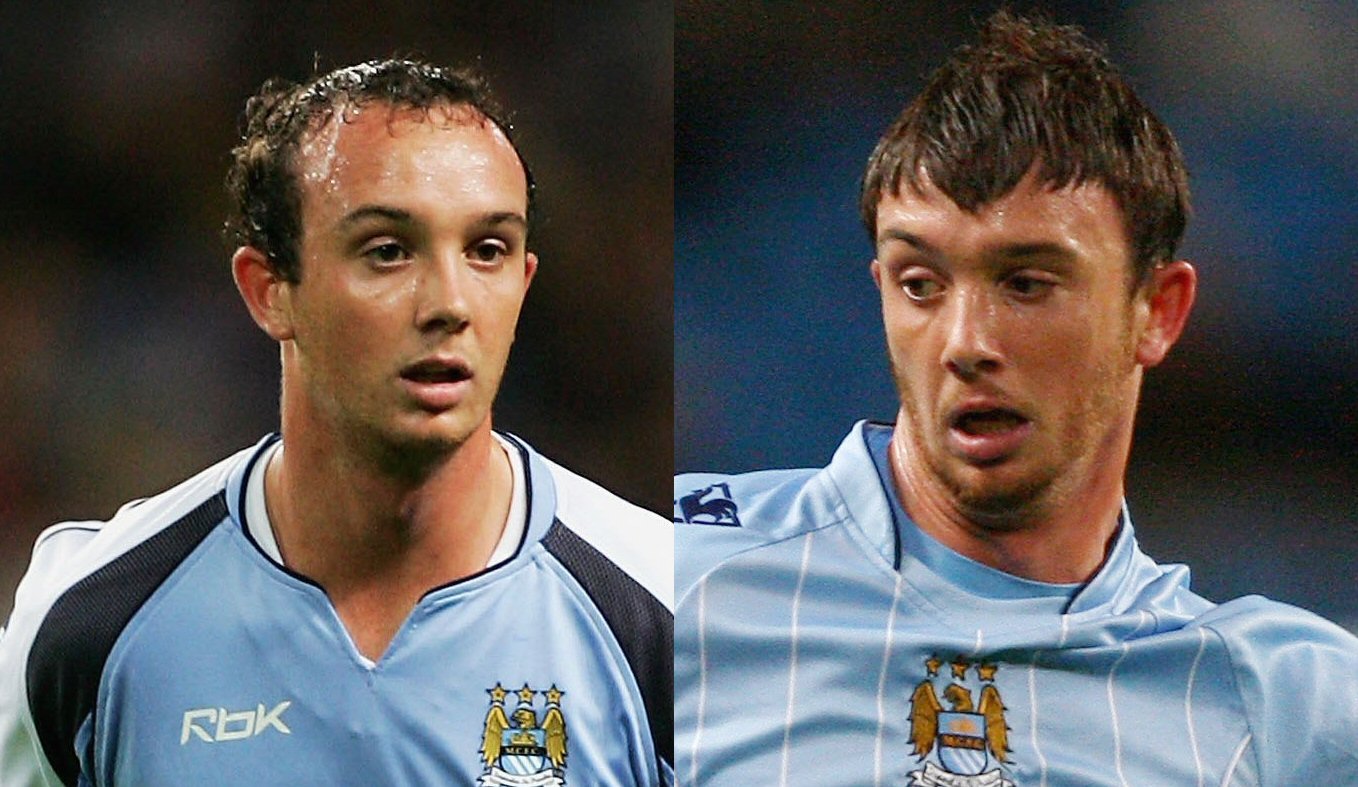




Friday, October 3, 2008
The Pantheon of Great Opening Lines
 "My name is Lester Burnham. This is my neighborhood; this is my street; this is my life. I am 42 years old; in less than a year I will be dead. Of course I don't know that yet, and in a way, I am dead already."
---- American Beauty (1999).
"I've been in this town so long that back in the city I've been taken for lost and gone and unknown for a long long time."
---- 'Heroes and Villains', The Beach Boys/Van Dyke Parks (1967).
"I believe in America."
---- The Godfather (1972).
"Mother died today. Or maybe yesterday, I don't know."
---- L'Étranger, Albert Camus (1942).
"Someone must have been telling lies about Josef K., he knew he had done nothing wrong but, one morning, he was arrested."
---- The Trial, Franz Kafka (1925).
"I am not Jesus but I have the same initials."
---- 'Dishes', Pulp (1998).
***

Tuesday, September 30, 2008
Hilarious Sporting Injuries Part 844224567 (This stuff doesn't get old)

Stoke City midfielder Liam Lawrence is a major doubt for his side's game on Saturday against Portsmouth. Why? Well, he went over on his ankle. Nothing unusual about that. How did he go over on his ankle? Lets see what Lawrence's manager Tony Pulis has to say:
"He has stepped over his dog on the stairs and his ankle just gave way and he went over on it ... The initial scan has shown no break but we have sent him back for another x-ray to make sure ... We don't know how serious it is at the moment, he may be okay for Portsmouth, but then again he may not be fit. We will have to wait and see."
"He has stepped over his dog on the stairs and his ankle just gave way and he went over on it ... The initial scan has shown no break but we have sent him back for another x-ray to make sure ... We don't know how serious it is at the moment, he may be okay for Portsmouth, but then again he may not be fit. We will have to wait and see."
Liam Lawrence tripped over his dog and now may miss playing time. Insert joke here about his terrier-like performances on the pitch.
Lawrence is, in most senses, a rather nondescript player. He has bounced around the lower leagues without ever making much of an impression. He was called up to the Ireland squad once or twice. However, we now know two things about what Liam Lawrence likes to get up to in his spare time.
1) He has a dog. And a house which is evidently not a bungalow, as it has stairs.
2) He likes to film himself and his friends having orgies, while one of the party does a football style match commentary on proceedings.
An average footballer then.
Subscribe to:
Posts (Atom)